CES 2012 at Technology Report ?! OMG!

Aside


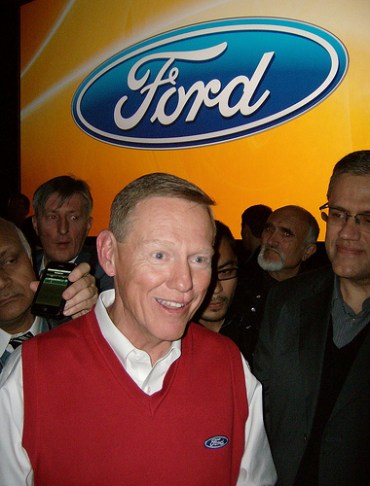
The rumors, of course, are true.   Starting immediately, over at Technology Report, I’m covering the Consumer Electronics Show in Las Vegas with “pre show” coverage.  In January I’ll be there roaming the halls in real time looking for the next big thing in Consumer Technology.    One of the fun things about CES is that it’s something of an “industry insiders” show, so you have pretty good access to folks that might otherwise be hard to talk to.  This photo is from the 2009 conference where I had a chance to ask Ford’s CEO Alan Mulally if  Ford would be taking bailout money from the US Government.

Image

Photo Credit @JoeDuck Technology Report. Use with attribution OK.

Mulally told me he did not think so, and very much to Ford’s credit he has remained true to that comment.  In fact Ford recently pulled a commercial, some say in response to White House pressure, where they noted this as the commercial takes a big dig at the other places that did take bailout money.

In an industry with what generally seem like a lot of lackluster intellects, Mulally was a very impressive speaker during his keynote talk as well as an impressive  “real time answers” guy in the give and take after the event (pictured here).   An aerospace engineer by training, Mulally is clearly a key factor in Ford’s apparently successful efforts to recover despite many global economic obstacles.  But Auto technology is not my specialty.  However in theory if not in practice I really *am* an expert at “social media” since I do have a …. wait for it….  Masters degree in the Social Sciences and about 20 years in various technology fields, mostly relating to using the internet to promote travel, tourism, and destination marketing.

But ome to think of it, NOTHING is really my speciality.   I’m a jack of some trades and master of none, except maybe table tennis, and then only for somebody of anglo saxon heritage. That said, most of what I’m hoping to report on at the show will be the latest and greatest computing devices and social media trends.    CES is not really focused on the content and programming portions of internet technologies, but there are always great examples of presentations and programming at the show.    In fact one of the most impressive tech things I’ve seen *anywhere* was at CES 2010 – Intel’s “Web Cube”, a superb blend of fast hardware and clever real time internet information flow where you could have the system go out and find people talking online about something and then pull those comments and information about them into the cube.   It was visually, conceptually, and informatively striking and I only hope they don’t just strand that technology in the exhibit.   Need to check as they may have this in use in other online places already.

Specialists vs Generalists


In My Humble Opinion ….. it seems that many of the most fascinating people tend to be *specialists* in their fields – highly focused experts in academia, cooking or sport or film or whatever.  Yet it seems the most interesting life you can lead is that of a *generalist*, dipping more lightly into the many amazing things the world has to offer a curious person.

This creates something of a problem if you want to be … interesting.   You can beef up your expertise in a small number of things and enjoy the attention or praise for your virtuousity, but this means you’ll have less time to simply enjoy the simpler things in life and less time to explore the almost infinite number of things going on around you.

Solutions?

Save time by watching more  TV instead of experiencing real stuff !  ?   : )

Be an expert in a few things you love, but save the rest of your time for exploration?

Travel More!   I love this option!

Satellite Medical Insurance! Get your Satellite Medical Insurance NOW!


Don’t look now but the UARS Satellite might be crashing into you!    Just when we thought Global Warming would fry our butts, the Upper Atmospheric Research Satellite crash is looming – probably today or tomorrow.

There’s a  statistic  floating around the interwebs that does not sound right at all to me.  It’s  the chance that somebody on earth will be hurt by the  falling satellite debris.  I think NASA is the source of the  claim that the “risk” to be 1 in 3200.

Note this is 1 in 3200 for ALL HUMANS.  YOUR risk – that is for a single person out of our 7 billion the chance is ridiculously  TRIVIAL.   As always it’s  remarkable anybody even calls this type of even a “danger”.

The real dangers of life, such as you driving a car or, even worse, forgetting to put on your seatbelt, or even worse, biking in a city have millions of time this level of risk.

Still that number seems very high to me given the surface area of earth.   Why wouldn’t a reasonable calculation  go something like below, which would itself be high given that most people are inside buildings, houses, and cars and therefore shielded somewhat.

7 billion people on earth X “injury zone” of a square meter per person (a large estimate)= 7 billion square meters.
Earth’s surface area is about 510 km2 = 510 trillion square meters.
510,000,000,000,000 / 7,000,000,000 = 72,857
Now, I’m not sure I’m taking into account the number of possible events here since it’ll break up into many pieces, but I’d think my meter per person would more than compensate for the size of the total satellite debris field.
That would be another approach – assuming you can pack about 4 people into a square meter,  humans are occupying (literally) about 1 / 300,000 of the earth’s surface at any given time.    Assuming the debris field will
occupy ———— of the surface then you can calculate the chance they will intersect?
Hmmm – this seems to get more complicated the more I try to figure it out …
Might hit TODAY – be sure to wear … new underwear!

Obama’s 2012 Military Budget Request: $671 Billion


[summary info source – US National Guard Article]Share

The president is asking Congress for $671 billion for FY2012
$553 billion DOD “base budget”plus $118 billion for Iraq and Afghanistan Wars.

Military personnel account for $142.8 billion of the base budget. Operations and maintenance is $204.4 billion, procurement is $113 billion and research and development is $75.3 billion.

Army portion of the base budget is $144.9 billion.

Navy and Marine Corps portion is $161.4 billion.

Air Force $150 billion.

Defense Department $96.8 billion.

2.3 million service members to receive a 1.6 percent pay raise.

Army strength 547,000

Marine 202,100.

Navy 325,000

Air Force 332,800.

All told, the department’s end strength will be 1,408,000 in fiscal 2012 if this budget is approved. In fiscal 2007, the end strength was 1,328,500

The budget includes $52.5 billion for the Military Health System. The system, which has 9.6 million beneficiaries.

The more than 600,000 civilians in the DOD work force will not receive a raise in calendar years 2011 and 2012 as part of the larger governmentwide freeze on wages. The department intends to hold the civilian work force at fiscal 2010 levels, though exceptions will be made for the on-going acquisition work force improvement strategy, officials said.

About 48,500 American troops remain in Iraq, and about 98,000 U.S. troops are in Afghanistan.

Most of the $117.8 billion in the overseas contingency operations fund — some $67 billion — goes to operations. Training Afghan forces consumes the next-largest amount, at $12.8 billion.

Are Wifi Hotspots Secure / Are Wifi Hotspots Safe?


TechRepublic.com  has an excellent article about security at internet hotspots.  As with most things technological, the answer to the common question “Are Wifi Hotspots Safe?” is not as easy as it should be.   I’d say the best simple summary I have to date is this:

1.Free Wifi networks at coffee shops, airports, etc are generally safe to use.

2. There’s always a chance that somebody will set up a “fake” network alongside a real one, but common sense will help prevent your accidental use of networks of dubious origin.

3. Although most of the time your online banking and passwords probably would not be hacked at a quality public wifi hotspot where you are confident of the provider, avoid banking and other high security activities in public when possible.

4.  Pay attention to the HTTPS appearing in the address bar, which generally means your actions are encrypted and therefore MUCH safer.  NEVER enter passwords when you don’t see the HTTPS as part of the web address.

The long answer is far more complex, because there are many variations on the hacking theme, and good hackers could steal all but very secure information in a variety of ways.