AppleGate


Here in Southern Oregon, Applegate is the charming valley and river that was named after early settlers. For Silicon Valley the new term “AppleGate” refers to the top tech blog Engadget’s posting of a fake email suggesting that Apple’s iPhone would be delayed. The report led to an almost immediate sell off of Apple stock and a 4 billion dollar decline in Apple’s market capitalization, though the stock rebounded quickly when it became clear the email was a fake.

This appears to be a *superb* example of how information is reflected by the stock market and how quickly. I get the idea the (bogus) iPhone delay rumor affected the price of APPL almost immediately but have not checked the timing.

Mike at TechCrunch has a nice play by play and graph of AppleGate, and the Engadget post AppleGate post is here.

Wagner Street Project – electrical panel Inspection is today


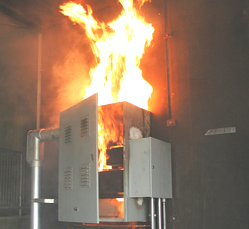
OK, today is my electrical panel inspection. Although I’d had it tagged before but it needed a new one because it had been disconnected so long.  This meant I had to make changes for what I think is a change in the code.  The main wires were looped down via a J shape onto the main bus but now need to be going straight on from the top.  I also had to bond to the water pipe via a special clamp that takes a bare #4 copper wire going up to a neutral in the panel (this was not a change in rules).

Hopefully I’ll get the tag today and Pacific Power will hook me up tomorrow as scheduled, and put in the new meter (the Power Company does the connect from street to the wires as they come out of the mast on top of roof).

panelfire.jpg

Wagner Street, Talent Oregon


What better way to process a big project than … blogging! ?

Today I had the Pacific Power guy come over tell me what tree trimming was needed to reconnect the service Panel that I’d installed some time ago but had been disconnected. The Electrical inspector was by the other day and told me I would need to add a ground to the water pipe (this is in addition to the ground running to two 8′ iron grounding rods!) I think this is standard Electrial Code stuff. I’ve certainly got nothing against the inspectors personally – most are courteous and professional around here.

However what seems to me to be a lot of unneeded change and overkill in the regulations is very interesting and I think can only be explained if you assume that there is a sort of “priesthood” of contractor/inspector folks who make these rules and want to both cover themselves against the slightest chance of problems arising combined with the fact they make more money and have more power if the rules are more complex.

The difference in mishaps in houses that have ONE 8′ grounding rod (old code) vs TWO 8′ grounding rods has GOT to be unmeasurably insignificant, yet those extra rods represent a huge amount of time/expense. Believe me, pounding an 8′ rod into the soil here is not fun and not educational!

Hmmm – let’s assume it takes a contractor a total of 30 minutes extra to install that extra rod, plus materials at $15, and the contracted labor is $60 per hour. This is $45 per install extra. So, one way to determine if this extra cost makes sense we could use the value of an American life according to the Dept of Transportation, about 2.7 million, and try to answer this question:

Since it costs folks about 2.7 million to install a second ground rod in about 60,000 houses, we’d expect to see at least one life saved by the second rod.    This seems EXTREMELY unlikely given that electricity is not a major cause of death at all (There are typically under 500 electrical fire deaths per year from ALL causes.  I’d bet there is not a single death attributed to the lack of a second ground rod).

Governor’s Tourism Conference


Oregon’s premier travel event is the Governor’s Tourism Conference. This year it was held in Sunriver, Oregon (about 15 miles south of Bend, Oregon) where the resort did a simply super job with food, accommodations, and hospitality.

My first Oregon Tourism conference was at Sunriver ten years ago and I think I’ve only missed one since then. It was great to catch up with folks I don’t see much since I stopped my internet marketing work with for the Southern Oregon Visitors Association a few years ago.

Although it’s been ten years since the internet became a key travel marketing tool, it’s still remarkable how print advertising remains the key marketing vehicle despite ROI measures that would make any truthful marketeer blush. Print enthusiasts, and even some silly “online marketing experts” have kept alive the myth that print ads lead to more than a trivial amount of web activity. I now attribute this to the fact people simply do not understand how cheap Pay Per Click advertising is as a destination marketing tool. It’s not uncommon for places to spend *several dollars* for a single print ad lead where a similar lead could be obtained online for as little as a nickel. I’d assumed years ago this gap would push people to PPC but as with most human behavior there is a huge level of psychological momentum that prevents them from changing behaviors. This is even true for huge companies like Ford that is *finally* moving to a much bigger online spend after a study showed how cost effective the online advertising has been for Ford.

One of the best presentations was from Golf Digest where even their head of research misconstrued results from a study of print vs online activity in planning golf related travel. He noted comparable numbers for the categories of “used print info” and “used online info” and suggested this meant that print advertising was therefore comparable to online in terms of effectiveness. This is technically true but it seems to me *extremely* misleading in terms of return on investment for advertising which won’t be comparable at all (they did not study this). Online you can target an ad and get *global reach*, all for pennies per click. With magazines you’d have to spend tens of millions *per ad* to get comparable reach on your message. Thus, as a marketer if you are deciding whether to run an ad in Golf Digest or run a comparably prices online campaign it is very likely that in almost all cases the PPC campaign will outperform the print one.

New Bear Camp Road Warning Signs


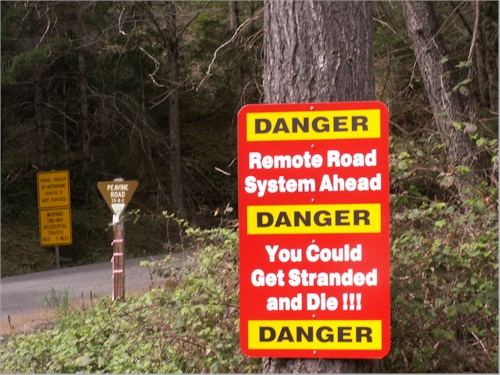
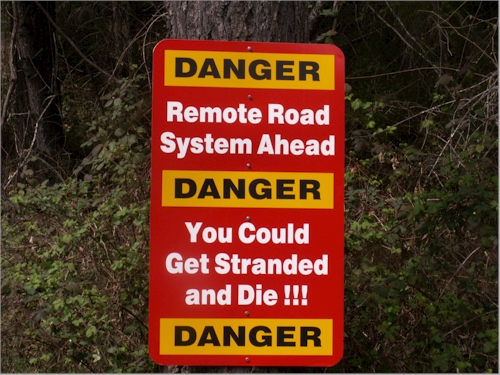
New warning signs have gone up in the Bear Camp Road area to warn travelers of the dangers there.    The sign effort was from John Rachor, the helicopter pilot who was instrumental in the rescue of Kati Kim and the Kim Children back in December.  A lot of people were asking John about the signs and he asked me to post these pictures:

bear-camp-sign-001.jpgbear-camp-sign-003.jpg

Travel, 21st Century Style


A German Artificial Intelligence lab is working on a travel information network that will use on board navigation to alert drivers to  trouble down the road.     Working in real time the system would alert drivers just a few minutes down the road to dangers ahead.   As autos get smarter and transportation info networks evolve we should see a lot of benefits.  Traffic congestion could be reduced substantially in metro areas simply by providing “early warning” to commuters via websites and alternative routing using on board navigation systems.    Rural problems tend to arise from weather problems and this type of information is already flowing online, though it’ll really be useful when drivers can easily access this information from their cars.     An example is Oregon’s TripCheck website which displays road cams and conditions information and Yahoo’s integration of mapping and traffic information for some metro areas.

BBC Report

SmartKom Website (warning – this odd site is NOT the way to write for a non-technical audience, or even for a technical one?)

Portland Tram


The new big attraction in Oregon is the Portland Aerial Tram.  The Portland Tram will whisk people from the lower “South Waterfront” terminal (located next to OHSU Center for Health & Healing),  to the upper terminal located at the Kohler Pavilion on the main campus of Oregon Health and Science University.   At 22 miles per hour the Portland Tram trip takes  three-minutes as it rises over Interstate 5, the Lair Hill neighborhood, and the Southwest Terwilliger Parkway.  Sounds fun!

Kim Search discussion page 9


Oregon State Sheriff’s Association Report

(Feel free to discuss this report in the comment section below)

The discussion of the Kim Family Search in the Rogue River region of Southern Oregon continues in the comment section below. Please feel free to chime in.

For earlier comments and information links about the Kim Story click here or at the top of any page on the “Kim Story” tab.

Shaming and blaming and the tragic death of James Kim


Over at Salon.com, Sarah Keech has a thoughful article about the Kim Family story, though I read it as a somewhat too defensive reaction to the letter from James’ Kim’s father Spencer published in the Washington Post last week.

In “Who’s to Blame for James Kim’s Death” Keech suggests, correctly in my view:

It’s not the federal government or law enforcement or the people who tried to rescue him from the Oregon wilderness.

Ironically, Spencer Kim would probably agree with her statement.   I’ve been concerned at the tone of many locals who have suggested a father, grieving his son no less, has no right to suggest that better maps, signs, gates and policies might have kept this from happening. Of course he has that right and his letter was in my opinion quite a reasonable reaction given that Mr. Kim has just lost his son to an unforgiving Oregon winter wilderness.

I know this area well and it’s common knowledge that signs on the Bear Camp Road could use improvement.   Money and priorities are legitimate issues with such improvements as are the rights people have to access to public lands.     A route that would be fine for an experienced hunter with 4WD Truck, chains, winter gear and provisions may become a death trap for a family car.

Here’s my reply to the Salon article:

Ms. Keech you have made several good and several obvious points about the folly of legislating solutions on the basis of unusual and tragic events, but that’s not the big story of the Kims tragic trip into Oregon’s Rogue River Wilderness. I think Spencer Kim’s letter is a reasonable characterization of the many challenges facing the search effort, though I agree the solutions suggested are far too expensive to justify the handful of lives this might save over many years. Better to spend on life saving measures that have a much higher return on the investment of tax dollars.

But that is _not_ the big story here!

As a southern Oregon local and long term resident of the region the Kim Family story capitivated me from the beginning. This interest has become almost obsessive as I blogged the event – almost play by play – as “Joe Duck”.

The Kim story is the triumph of a mother and children surviving the wilderness after nine days, and a father heroically challenging that wilderness in an unsuccessful, tragic hike to save them. It’s the story of an enormous and sometimes heroic search and rescue effort that was well intentioned at all times, but plagued by many of the bureaucratic forces that are likely to be proposed as the solution to future problems in Oregon. Perhaps more than anything the Kim Story is remarkable because it has touched the lives of millions around the world, millions who saw in the Kim’s happy family their own family and the life-shattering consequences of a single wrong turn on what appeared to be a passable road.